


Spring Bullets
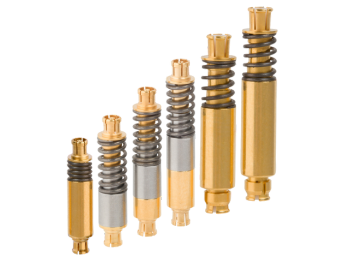
SV Microwave’s Spring Bullets are engineered to ensure exceptional RF performance across high-frequency and demanding applications. Their spring-loaded, compressible design eliminates gaps during gang mating. This maintains consistent electrical performance throughout the entire range of compression. These bullets are ideal for aerospace, military, instrumentation, and satellite communications applications. Several different standard lengths are available in distribution with customized lengths available upon request. These bullets provide unparallelled signal performance while maintaining a simplified and user-friendly design.
Features / Benefits:
- Available in SMP, SMPM & SMPS
- Mitigates performance degradation from gaps due to tolerance stack up
- Wide range of available sizes
- Performance guaranteed under all states of compression
Applications:
- High density, small form factor
- Complex board to board with multiple simultaneous mates
- Large-scale blind-mate arrays
The specifications below are typical for the connector series, but may not apply to this particular part. Please see the datasheet for full specifications.
SMP
| Impedance (Ω) | 50 |
| Frequency GHz | 40 GHz |
| Shielding Effectiveness | ≥ -80 dB DC - 3 GHz ≥ -65 dB 3 - 26.5 GHz |
| Dielectric withstanding Voltage | 500 VRMS |
| Mating Cycles - SB | 1000 |
| Mating Cycles - LD | 500 |
| Mating Cycles - FD | 100 |
| Insertion Force - SB | 3.0 lbs |
| Insertion Force - LD | 5.0 lbs |
| Insertion Force - FD | 7.0 lbs |
| Withdrawal Force - SB | 0.5 lbs |
| Withdrawal Force - LD | 7.0 lbs |
| Withdrawal Force - FD | 9.0 lbs |
| Axial Misalignment | .010” Max |
| Radial Misalignment | 3° Max |
| Temperature Rating | -65°C to +165°C |
| Corrosion (salt spray) | MIL-STD-202, Method 101, Condition B |
| Vibration | MIL-STD-202, Method 204, Condition D |
| Shock | MIL-STD-202, Method 213, Condition I |
| Thermal Shock | MIL-STD-202, Method 107, Condition B |
| Moisture Resistance | MIL-STD-202, Method 106, Less Step 7B |
| Barometric Pressure (Altitude) | MIL-STD-202, Method 105, Condition C, 70k Ft. |
SMPM
| Impedance (Ω) | 50 |
| Frequency GHz | 65 GHz |
| Shielding Effectiveness | ≥ -80 dB DC - 3 GHz ≥ -65 dB 3 - 26.5 GHz |
| Dielectric withstanding Voltage | 325 VRMS |
| Mating Cycles - SB | 500 |
| Mating Cycles - FD | 100 |
| Insertion Force - SB | 2.5 lbs |
| Insertion Force - FD | 4.5 lbs |
| Withdrawal Force - SB | 1.5 lbs |
| Withdrawal Force - FD | 6.5 lbs |
| Axial Misalignment | .010” Max |
| Radial Misalignment | 3° Max |
| Temperature Rating | -65°C to +165°C |
| Corrosion (salt spray) | MIL-STD-202, Method 101, Condition B |
| Vibration | MIL-STD-202, Method 204, Condition D |
| Shock | MIL-STD-202, Method 213, Condition I |
| Thermal Shock | MIL-STD-202, Method 107, Condition B |
| Moisture Resistance | MIL-STD-202, Method 106, Less Step 7B |
| Barometric Pressure (Altitude) | MIL-STD-202, Method 105, Condition C, 70k Ft. |
SMPS
| Impedance (Ω) | 50 |
| Frequency GHz | 65 GHz |
| Shielding Effectiveness | ≥ -80 dB DC - 3 GHz ≥ -65 dB 3 - 26.5 GHz |
| Dielectric withstanding Voltage | 250 VRMS |
| Mating Cycles - SB | 500 |
| Mating Cycles - FD | 100 |
| Insertion Force - SB | 1.2 lbs |
| Insertion Force - FD | 2.5 lbs |
| Withdrawal Force - SB | 1.0 lbs |
| Withdrawal Force - FD | 4.5 lbs |
| Axial Misalignment | .010” Max |
| Radial Misalignment | 3° Max |
| Temperature Rating | -65°C to +165°C |
| Corrosion (salt spray) | MIL-STD-202, Method 101, Condition B |
| Vibration | MIL-STD-202, Method 204, Condition D |
| Shock | MIL-STD-202, Method 213, Condition I |
| Thermal Shock | MIL-STD-202, Method 107, Condition B |
| Moisture Resistance | MIL-STD-202, Method 106, Less Step 7B |
| Barometric Pressure (Altitude) | MIL-STD-202, Method 105, Condition C, 70k Ft. |
Application Note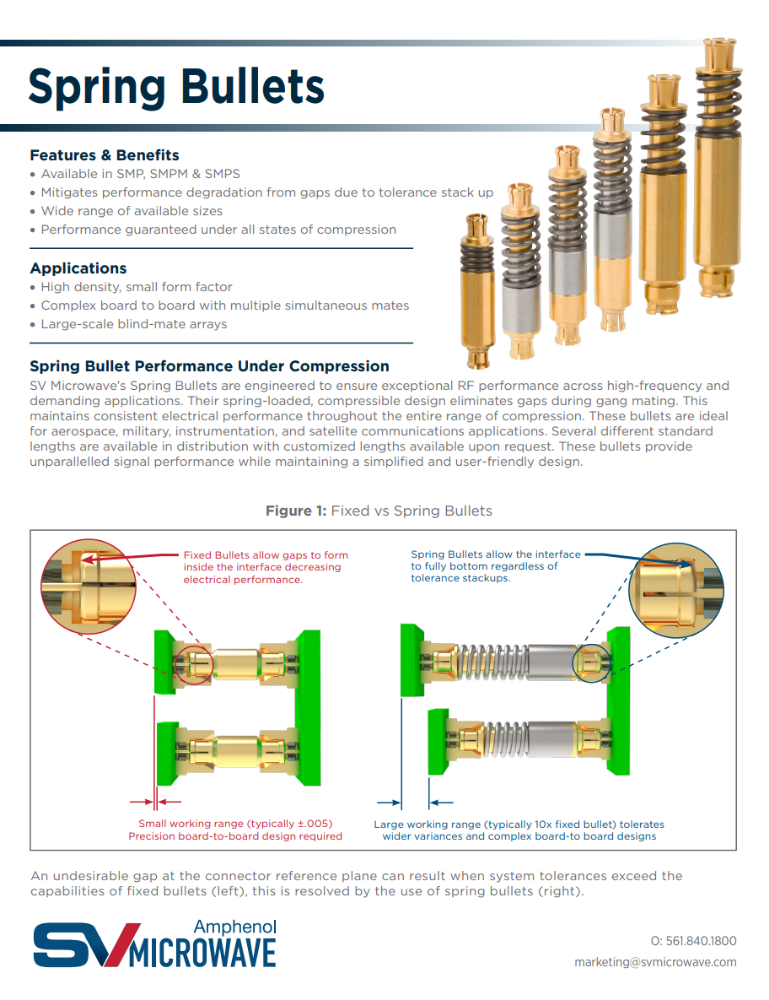 | Product Video |
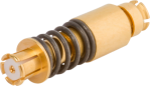
1112-4144
SMP Adapters 1112-4144
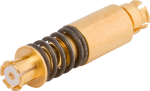
1112-4145
SMP Adapters 1112-4145
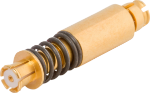
1112-4146
SMP Adapters 1112-4146
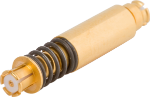
1112-4147
SMP Adapters 1112-4147
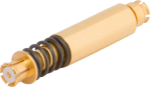
1112-4148
SMP Adapters 1112-4148
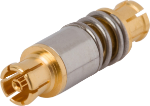
1132-4006
SMPM Adapters 1132-4006
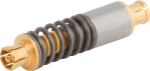
1132-4113
SMPM Adapters 1132-4113
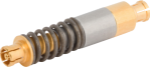
1132-4114
SMPM Adapters 1132-4114
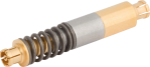
1132-4115
SMPM Adapters 1132-4115
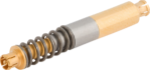
1132-4116
SMPM Adapters 1132-4116
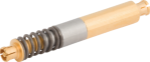
1132-4117
SMPM Adapters 1132-4117
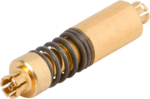
1138-4072
SMPS Adapters 1138-4072
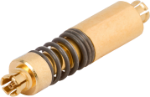
1138-4073
SMPS Adapters 1138-4073
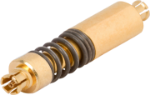
1138-4074
SMPS Adapters 1138-4074